
Information for the
October 2026 Biblical Study Tour (Greece and Turkey)
 CONTENTS
-
- Welcome
- BST Greece schedule
- BST Turkey schedule
- Key dates in Greek history
- Key dates in Turkish history
- Emperors, Philosophers, & Guides
- Ancient Alphabets
- The Olympian gods
- The Colorful Tutku document
- October 2026 participants
- Photo link
- Italy 2027!
- Donate to excavation of Colossae or to support IBTM
[1] WELCOME
a. Welcome to the 31st Biblical Study Tour!
 b. For all who are arriving on the 3rd, or have made an arrangement with our agents: Once you have collected your baggage and left the baggage hall, you will be met by a Tutku representative carrying a Tutku sign. The driver will take you to the Herodion Hotel, 4 Rovertou Galli St, tel. +30 21 0923 6832. This is where we will overnight during the Greek part of our tour.
c. There is no dress code, so dress for comfort. In active (traditional) churches and all mosques, shoulders and knees must be covered. We have also suggested wearing comfortable walking shoes, or even hiking boots, given the amount of walking, especially over rough ground, involved in our tour.
d. BRING YOUR SWIMSUIT! Our hotel in the Hierapolis area has a mineral spring-fed swimming pool. You won't want to miss this! Sorry, I meant to mention this earlier.
d. If jet lag is an issue, you'll find practical solutions here.
e. For further useful information, scroll down to section 9.
[2] OUR SCHEDULE IN GREECE
Sat Oct 3 Arrive Athens (ATH), meet Tutku representative
18.45 Champagne reception for all at Herodion Hotel. Ground floor, right off lobby (the breakfast room).
Please don't miss the orientation and opening dinner! You will receive your name badge and lanyard. Please wear your name badge every day of the tour, all day—any time you're with the group. This identifies us to our drivers and guides. And it makes it easier to remember each other's names ;-).
You will also receive a special gift (one per couple, one per single). (If you arrive late, collect your gift from Douglas Jacoby or Matt or Sue Smith at breakfast.)
Our Greek guide's name is Maria Papadopoulou (tel. +30 6974 902393). Tour co-leaders are Paul Copan (+1 561 6035363) and Douglas Jacoby (+1 678 2318881).
19.30 Dinner at Herodion Hotel
Sun Oct 4
07.00 Breakfast open
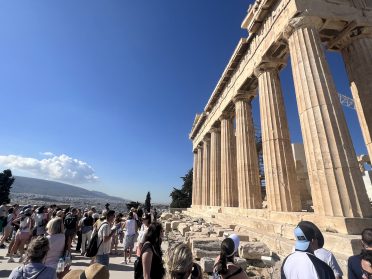
08.30 Explore the Acropolis and Areopagus. Meet in lobby 08.20.
You'll receive an audio unit, so that you can hear the guides' commentary. Take care of your audio unit! If the battery runs down, it will be replaced.
11.00 Visit the Agora. Communion in the Agora.
12.00 Lunch on own
14.00 Bus to National Archaeological Museum (optional)
17.00 Back at hotel (unless you prefer to walk or take a bus)
18.30 Dinner at Herodion
Photos—Greece and Turkey portions of tour:
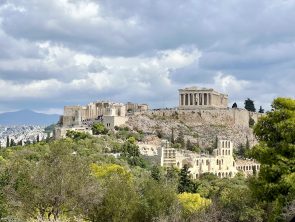
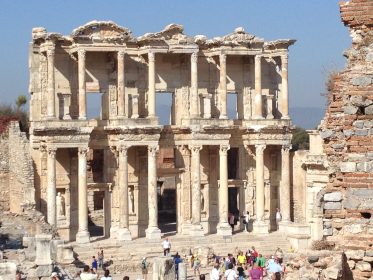
Acropolis, Athens; Library of Celsus, Ephesus; Blue Mosque, Istanbul
Mon Oct 5
07.00 Breakfast open
09.30 Bus departs for Marathon.
Each day, please arrive 5-10 mins before the slated bus departure time. That we will be able to leave on time—and spend less time in traffic :-). This means that today you should be on the bus between 09.20 and 09.25. Thank you.
On the buses, please leave the first two rows completely empty for your three guides (left side and right side).
Archaeological Museum, Tumulus, Lake, Light lunch in Marathon Village
For more on Marathon, check out this follow-up link.
16.00 Panoramic bus tour of Athens
19.00 Dinner at Herodion
Tue Oct 6
07.00 Breakfast open
08.30 Bus departs. Corinth Canal (photo op)
10.15 Archaeological Museum, Agora, Bema, temples...
12.30 Lunch on own
13.30 Port of Cenchrea
14.30 Return to Athens
19.00 Walk to Strofi (restaurant near Acropolis)
Wed Oct 7
07.00 Breakfast open (closes 09.30). Free time.
11.00 Check out. The hotel will hold your luggage for you.
13.00 Coach to airport (ATH). Please bring your luggage to the coach for loading between 12.30 and 12.40.
17.15 Flight to İzmir (ADB)
 [3] OUR SCHEDULE IN TURKEY
Wed Oct 7
17.15 Fly Athens – İzmir (ATH-ADB). Bus to Korumar Hotel DeLuxe, Kuşadası.
19.30 Dinner at Korumar Hotel. Please note: complete hotel information is included inside the color document from Tutku (no. 9 at this webpage).
We are now in biblical Turkey: the land, after Israel, where most of the action in the Bible takes place!
Thu Oct 8
07.00 Breakfast open
08.30 Basilica of John, Ancient Ephesus, Ephesus Museum
Please remember, the first two rows on our bus are reserved for the speakers.
Our Turkish local guide is Nazım Uzun (tel. +90 535 2637500).
17.00 Return to hotel
19.00 Dinner at Korumar Hotel.
Fri Oct 9
07.00 Breakfast open
08.30 Smyrna agora, Pergamum
17.00 Return to hotel
19.00 Dinner at Korumar Hotel.
Sat Oct 10
07.00 Breakfast open
08.30 Miletus and Didyma
17.00 Return to hotel
19.00 Dinner at Korumar Hotel.
Sun Oct 11
07.00 Breakfast open
08.30 Communion service at hotel
09.15 Explore Colossae and Laodicea
For an update on the excavations at Colossae, listen to the Interview with Barış Yener
17.00 Check in to Doğa Thermal Hotel & Spa, Pamukkale
19.00 Dinner at Doğa Hotel
Mon Oct 12
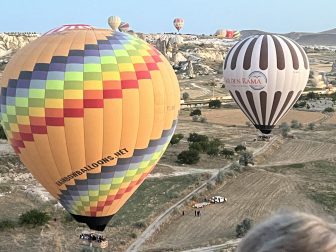
TBD Optional balloon trip (early morning departure).
07.00 Breakfast open
08.30 Explore Hierapolis
17.00 Check in to Mövenpick Hotel İzmir
19.00 Farewell dinner at seaside restaurant (Adebayi Restaurant), İzmir
Tue Oct 13 Transfer to İzmir airport (ADB)
07.00 Breakfast open. If you are leaving before breakfast and would like to kitchen to prepare you a meal to take with you, please make this known to our local guide.
POST-TOUR: ISTANBUL
Tue Oct 13
07.30 Pickup for 10.40 flight İzmir to İstanbul (ADB-IST), landing 12.00
14.00 Check in to İstanbul Old City Crowne Plaza. Rest of the day free.
19.00 Dinner at Crowne Plaza
Our Istanbul guide Nazım Uzun (tel. +90 535 2637500).
 Wed Oct 14
07.00 Breakfast open
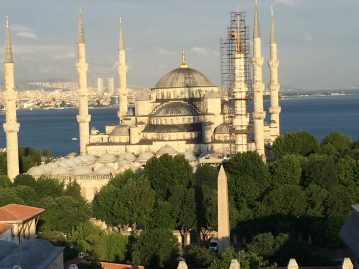
08.30 Hippodrome, Blue Mosque, Hagia Sophia, Archaeological Museum, Hagia Eirene
17.00 Return to hotel
18.30 Dinner at Crowne Plaza
Thu Oct 15
07.00 Breakfast open
08.30 Chora Church, Greek Orthodox Patriarchate, Galata Tower, Spice Bazaar, Bosphorus cruise
17.00 Return to hotel
18.30 Dinner at Crowne Plaza
Fri Oct 16
07.00 Breakfast open
Transfer to İstanbul airport (IST)
[4] KEY DATES IN GREEK HISTORY
c.3000-1100 BC Bronze Age. Rise and fall of Minoan civilization on Crete and Mycenaean civilization on the mainland. The precise times of the Stone Age, Bronze Age, Iron Age, etc. vary from place to place.
c.1100-800 Greek Dark Ages. Depopulation, disappearance of written scripts following collapse of Mycenae.
c.800-480 Archaic Period. Rise of the city-states (Athens, Sparta, Corinth, Thebes, etc). Widespread Greek colonization Areopagus originates as an aristocratic council.
776 First Olympic Games
c.750 Homer writers Iliad and Odyssey, establishing the cultural identity, values, and mythology of the Greek world.
c.621 Draco’s law code
594 Solon’s reforms
490-479 Persian Wars. In 490, Pheidippides runs from the battlefield of Marathon to Athens to announce Greek victory over the Persians. He allegedly exclaims “Joy—we win!” before collapsing and dying from exhaustion.
c.484-425 Herodotus, “Father of history”
c.460-370 Hippocrates, the “Father of western medicine”
431-404 Peloponnesian War
c.480-323 Classical Period. Golden Age of Athens. Pericles (495-429). Parthenon built (447-432). Socrates (c.470-399), Plato (c.428-348), Aristotle (384-322).
336–323 Alexander the Great rules the Macedonian/Greek Empire, spreading Greek language and culture (Hellenization) across the biblical world. See Daniel 2 and 7.
323-146 Hellenistic Period. Greek culture spreads across the Mediterranean and the Near East.
c.287-212 Archimedes: mathematician, physicist, engineer. Breakthroughs in geometry, hydrostatics, machines of war.
168 BC Antiochus IV Epiphanes desecrates the Temple in Jerusalem, triggering off the Maccabean Revolt (see 1-2 Maccabees). He is also prophesied in Daniel 11.
146 BC-330 AD Roman Period. Conquest of Greece begins with the destruction of Corinth.
AD 49–50 Paul arrives in Macedonia (N Greece) on his 2nd missionary journey, crossing into Europe—founding churches in Philippi, Thessalonica, Berea (Acts 16–17).
50 Paul preaches at the Areopagus (Acts 17:16–34).
50–52 Paul spends 18 months in Corinth (Acts 18:11), standing trial before the proconsul Gallio—a key anchor date for the New Testament timeline. He later writes his letters to the Thessalonians and Corinthians.
257–263 Goths raid Greek peninsula, sacking Athens, Corinth, Sparta, and Argos.
330 Constantine inaugurates Constantinople (built on the Greek city of Byzantion) as the new capital of the Roman Empire, placing Greek language and culture at the center of the state.
529 Justinian closes Neoplatonic Academy in Athens. Symbolic end of classical pagan philosophy & triumph of Christian institutions.
843 Triumph of Orthodoxy ends Iconoclastic Controversy, establishing Byzantine religious art, liturgy, and culture.
1460-1500 Ottoman Empire completes conquest of Greek mainland.
1821-1829 Greek War of Independence from Ottoman Empire.
1919-22 Greco-Turkish War—Greek invasion of Asia Minor prompted by the collapse of the Ottoman Empire after World War One is defeated by Turkish forces.
1940 Italian dictator Benito Mussolini's forces attack Greece from Italian-held Albania, but are repelled.
1941-1944 Greece falls to Germany. More than 100,000 die in famine. Fierce resistance to occupation.
1944 British and Greek forces combine to force Nazi withdrawal.
1974 Greece-backed coup against president of Cyprus leads to Turkish invasion and occupation (N Cyprus).
1981 Greece joins the EU.
2002 The euro (€) replaces the drachma (Δρ).
2004 Athens hosts the Olympic Games.
2026 You visit Athens, Corinth, Cenchrea, and other sites in Greece.
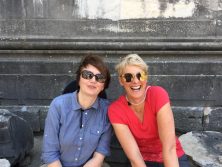
Photo: Vicki and a friend in Temple of Apollo in Didyma (8th cent. BC), 16 km from Miletus
[5] KEY DATES IN TURKISH HISTORY
7000 BC Oldest settlement (?) – Çatal Höyük (Boğazköy)
2000 Hittites arrive from the Caucasus.
667 Byzantion founded by Greek colonists from Athens and Megara led by Byzas. City under the rule of successive empires,
including Lydia, Persia, Athens, and Macedonia.
334 Anatolia (and Byzantion) taken from Persians by Alexander the Great.
281 Byzantion regains its independence.
64 BC On his way to conquering the Maccabean kingdom of Israel, the Roman general Pompey brings Byzantion into the Roman
Empire, renaming it Byzantium.
1 AD Paul is born in ancient Turkey (in Tarsus of Cilicia).
33 Birth of the church
48 1st Missionary Journey – churches planted throughout Asia Minor. Galatians written.
60 Philippians, Colossians, Philemon, Ephesians
63 1 Timothy (and some years later, 2 Timothy)
64 1 Peter—written to five provinces in Asia Minor
90 1 John (and the other 2 letters)
96 John in exile on island of Patmos (or 69 AD). Revelation addresses Christians in the province of Asia. There are 3 “Asias”:
(1) Asia, the continent; (2) Asia Minor (Anatolia), approximately coextensive with modern Turkey; (3) the ancient Province of Asia
311 Persecution ends, Christianity soon becomes popular, and the stage is set for apostasy.
324 Constantine becomes sole and undisputed emperor of the Roman Empire.
325 Council of Nicaea (Nicaea, or modern Iznik, not far from Constantinople) rules against Arians
330 Constantine moves Roman imperial capital to Byzantium; eventually city known as Constantinopolis.
476 Fall of the Western (Latin-speaking) Roman Empire. This leaves only the Eastern (Greek-speaking) Roman Empire, which become known as the Byzantine Empire.
527 Justinian becomes Eastern Roman Emperor, expanding Byzantine Empire to its greatest size to include Syria, Palestine, Asia Minor, Greece, Balkans, Italy, southern Spain, North Africa, Egypt. City > 400,000.
537 Justinian completes Haghia Sophia (= Holy Wisdom).
639 Muslim armies conquer Syria, Holy Land, Egypt, and Jordan, taking control of southern Byzantine territories.
726 Leo III issues a decree forbidding idolatry: all icons to be destroyed throughout the Byzantine Empire. (A church council meeting in Haghia Sophia reinstates icons in 843.)
1000 Turks begin to invade Turkey.
1054 The Great Schism between the Roman Catholic and Eastern Orthodox churches. Roman Pope and Patriarch of Constantinople excommunicate one another over theo-political issues.
1071 Byzantine army badly beaten at the Battle of Manzikert by the Seljuk Turks. The Turks go on to eventually conquer and take most of Asia Minor, including, Armenia away from the Byzantine Empire.
1096 The Crusades begin.
1204 Fourth Crusade leads to a Latin occupation of Constantinople, the Byzantine Empire is reduced to a few fighting city-states in its outlying regions; much of her art is plundered and sent to Europe.
1243 The Mongols invade.
1261 The Byzantine Emperor Michael Palaeologus recaptures Constantinople.
1301 Osman I establishes an independent kingdom on the Eastern Byzantine Empire and begins the Turkish Ottoman Empire, which eventually becomes one of the largest world empires in history.
1300s The Ottoman Turks slowly advance, taking Byzantine Asia and Europe until all that remains of the Byzantine Empire is
1400s Constantinople—which holds off the Ottomans as long as they can.
1453 Sultan Mehmet II (Mehmet the Conqueror) finally conquers Constantinople, and the Ottoman Turks now take control of the entire Byzantine Empire. Mehmet rebuilds the city and, under the Ottomans, it becomes a cosmopolitan city where Muslims, Christians, and Jews live together.
1520-66 Suleyman the Magnificent reigns over one of the world's greatest empires. Ottoman empire reaches its height in terms of area covered, artistic, scientific, and cultural achievements.
1683 The Ottoman advance into Europe is put to a stop at the Battle of Vienna.
1908 Young Turk Revolution—degenerates into dictatorship during WWI.
1915-16 Gallipoli Campaign (Germans & Turks v. Allies), in midst of WWI (1914-1918)
1919-22 The British and French occupy Constantinople.
1922 Atatürk (born 1881) abolishes the sultanate, effectively ending the Ottoman Empire.
1923 The Republic of Turkey establishes a secular state with its capital at Ankara, 29 October.
1930 Constantinople is officially renamed İstanbul.
1938 Ataturk dies, 9:05 am on 10 November in the Dolmabahçe Palace. National moment of silence every year, 10 Nov at 0905.
1952 Turkey joins NATO.
2002 Recep Tayyip Erdoğan becomes Prime Minister of Turkey—and has remained in power ever since.
2026 You have an amazing visit to Turkey and are already looking forward to your return visit!
 Picture courtesy of Henry Au (Hong Kong) and AI.
[6] EMPERORS, PHILOSOPHERS, & GUIDES
Roman Rulers up to AD 200 — Memorize the complete list (anytime during our tour) and I'll happily buy you (and your spouse or friend) a bottle of wine. Or you can receive a $20 bill.
Seven Kings (from Romulus to Tarquin the Proud), 753-509 BC
Republic (consuls, senate, assemblies), 509-27 BC
-- First Triumvirate (Caesar, Pompey, Crassus), 60-53 BC
-- Julius Caesar (dictator) 49-44 BC
-- Second Triumvirate (Marc Antony, Lepidus, Octavian), 43-33 BC
-- Marc Antony and Octavian, 33-31 BC
Augustus Caesar (Octavian) (emperor), 27 BC-AD 14
Tiberius, 14-37
Caligula (Gaius), 37-41
Claudius, 41-54
Nero, 54-68
Galba, 68-69
Otho, 69
Vitellius, 69
Vespasian, 69-79
Titus, 79-81
Domitian, 81-96
Nerva, 96-98
Trajan, 98-117
Hadrian, 117-138
Antoninus Pius, 138-161
Marcus Aurelius, 161-180
Commodus, 180-192
Pertinax, 193
Didius Julius, 193
Septimius Severus, 193-211
- Presocratric Philosophers (philosophers before Socrates [470-399 BC])
- Ancient Philosophers (philosophers from Socrates onward)
- Origins of the marathon
- For lots more interesting material (esp. philosophy and apologetics), be sure to visit PaulCopan.com.
- For a dynamic video tour of Greece with British actor Sir David Suchet, click here.
- For a dynamic video tour of Turkey with David Suchet, click here.
- Rick Steves' travel app—lots of material on our destinations—here.
- Watch this video on how Istanbul was fortified—here.
- Paul Copan books—here.
- Douglas Jacoby books—here.
[7] ANCIENT ALPHABETS
Take a few minutes to familiarize yourself with the alphabets in use where the BST is taking us. Many of the Greek letters are the same as our Roman letters. Other letters may be familiar from school days (math and physics). The Turks used to use Perso-Arabic script, but with the foundation of modern Turkey in the 1920s switched to a Roman alphabet, read left-to-right. (There are only a few extra letters: ç, ş, ö, ü, and ı.)
Most of the inscriptions we see in Greece and Turkey are in Greek. A minority are in Latin, which uses the familiar (to us) Roman alphabet.
Note: although the ancient Greek alphabet is essentially the same as the modern alphabet, the pronunciations below are for ancient (not modern) Greek.

[8] THE OLYMPIAN GODS
THE TWELVE GODS OF OLYMPUS
- Zeus or Jupiter. King of the gods, ruling over Mount Olympus. The god of thunder and lightning, as well as law and order. His symbols are the thunderbolt, the eagle and the oak tree. Zeus' parents were the Titans Cronos and Rhea, and he is the youngest brother of Hestia, Demeter, Hera, Hades, and Poseidon (who are also gods in the pantheon). According to Greek mythology, Zeus' father Cronos learnt that one of his children was fated to dethrone him as leader of the gods, so ate each one as soon as they were born.
- Hera or Juno. Wife and sister of Zeus, queen of the gods. Her chariot is pulled by peacocks instead of horses. Here is the goddess of marriage, childbirth and fertility. Although often depicted as reserved and calm, she repeatedly sought revenge for Zeus’ many affairs with mortal and immortal women, punishing them and their offspring.
- Poseidon or Neptune. God of the sea, horses and earthquakes, often shown driving a chariot of horses or sea creatures and wielding the trident he used to control the waves. As his brothers Zeus and Hades rule the skies and the underworld, Poseidon was given control of the sea and protected sailors and seafarers. His many children include both the winged horse Pegasus – whom he fathered with the Gorgon Medusa – and the Cyclops Polyphemus, who was blinded by Odysseus and his crew in Homer's Odyssey.
- Ares or Mars. God of war. You can recognize him by his armor and weapons – usually a spear and a shield – and he is sometimes accompanied by a boar or a vulture. The son of Zeus and Hera, god of bloodlust and violent warfare. Although unpopular with the other gods of the classical pantheon, with the exception of his lover Aphrodite, Ares was particularly admired in Sparta as the ideal soldier. By contrast, his Roman equivalent Mars was far more popular, second only to Jupiter, considered to be the protector of Rome.
- Athena or Minerva. Ares' half-sister is the Greek goddess Athena. Goddess of reason, handicraft, wisdom, and war, she is the daughter of Zeus and according to legend, sprang fully grown from his forehead, dressed in armor. She also gives her name to the city of Athens. Often shown wearing a helmet to demonstrate her prowess in war. Her symbols include the owl and the olive tree.
- Demeter or Ceres. Goddess of agriculture and the harvest, presiding over the fertility of the earth and the natural cycle of life and death. She was the mother of Persephone, abducted by Hades and forced to live in the underworld for six months of the year. When her daughter was abducted, Demeter searched continuously, preoccupied with grief, and as a result her attention was diverted from the harvest and plants began to die. When Persephone returned, Demeter cared for the earth again. This cycle created the seasons.
- Apollo. The sun god, and the only deity in the classical pantheon sharing the same name in both Greek and Roman traditions. Twin brother of Artemis (Diana), Apollo has many associations, including the sun, music, archery, prophecy and healing. Symbols include the sun, a bow and arrow, a lyre, and a swan. Apollo and Artemis were the children of Zeus and Leto. On hearing of Leto's pregnancy, Hera banned Leto from giving birth on land. Leto found the island of Delos, and gave birth to Apollo and Artemis safely there.
- Artemis or Diana. Apollo's twin sister, goddess of the hunt, wild animals, chastity and childbirth. She is often shown with a stag or hunting dog, and you can recognize her as the only goddess who wears a shorter dress, with the hem lifted and tied with a belt so she could run with ease.
- Aphrodite or Venus. Goddess of love, sex, and beauty, said to have emerged from the white foam generated when the Titan Cronos threw the severed testicles of his father, Ouranos, into the sea. Aphrodite's symbols include doves, roses and myrtles. Although married to Hephaistos, the master blacksmith, she had multiple affairs, including with Ares. Usually accompanied by Eros (Cupid), the god of lust.
- Hephaistos or Vulcan. Aphrodite's husband and god of fire, master blacksmith, and a craftsman who made weapons and tools for the gods and select mortals, e.g. Hermes' helmet and winged sandals, Achilles' armor, and Aeneas' shield. He became the patron of craftsmen, and volcanic fires were often considered to be his workshops. Vulcan gives his name to “volcano.” and, less excitingly, vulcanized rubber.
- Hermes or Mercury. Messenger of the gods, also a pastoral god, protecting livestock and travelers. Symbols include the caduceus – a staff intertwined with two snakes – as well as winged sandals and cap, and also a tortoise. Hermes was the son of Zeus and the nymph Maia. He could travel quickly between divine and mortal worlds with his winged sandals and was responsible for transporting souls to the underworld. He was also the patron god of merchants and thieves.
- Hestia or Vesta. Goddess of the hearth, fire and of the right ordering of domesticity and the family; she was born into the first Olympian generation and was one of the original twelve Olympians. She’s the first child of Cronus and Rhea, the elder sister of Hades, Demeter, Poseidon, Hera, and Zeus. Some lists of the Twelve Olympians omit her in favor of Dionysus.
- Dionysos or Bacchus. Youngest of the Olympian gods, son of Zeus and the mortal Semele. God of wine, vines, fertility, and festivity. Often shown with grapes and vines, as well as panthers, leopards and tigers. Bacchanalia (Dionysia) were raucous festivals celebrating him. (I've included him only because a minority believe he should occupy twelfth place, not Hestia.)
Adapted from https://www.britishmuseum.org/blog/gods-and-goddesses-greek-and-roman-pantheon. This webpage includes more information than the condensed version above, along with pictures of the gods.
[9] COLORFUL TUTKU DOCUMENT
Click on the link below for the Tutku file. Note: there have been some small changes since Tutku Educational Travel sent you this document (in early September). But it's helpful and nicely done—well worth perusing again!
TUTKU BST 2026 Greece & Turkey
[10] OCTOBER 2026 PARTICIPANTS
CHINA
Henry Au
Antony Wong
JAMAICA
Courtney Bailey
Lovette Bailey
PHILIPPINES
Rein Veral
Graciel Veral
SWITZERLAND
Daniel Bertholet
Ania Bertholet
UNITED KINGDOM
Malcolm Cox
UNITED STATES
California
Kim Boudreaux
Octave Lindly
Nanci Nations
Dan Stokes
Rin Tidmarsh
Florida
Jacqueline Copan
Paul Copan
Carma Kuhn
Tom Kuhn
Kate Rouh
Georgia
Debbie Harris
Joey Harris
Douglas Jacoby
Vicki Jacoby
Illinois
Larry Clipp
Leslie Penner
Mark Penner
Michigan
Nikita Alomia
New Jersey
Marcus Williams
Sonia Williams
New York
Alba Zayas
Philip Zayas
North Carolina
Miles Ferguson
Patricia Ferguson
Judy Homiller
Matt Homiller
Pennsylvania
John Brush
Pat Brush
Sam Stricklan
Vanneta Hyatt
South Carolina
Paul Leas
Brenda Leas
Matt Smith
Sue Smith
Virginia
David Wood
Marie Wood
 [11] PHOTOS
Click HERE to upload photos to our group gallery—or lick on the QR code.
[12] ITALY 2027 (provisional)
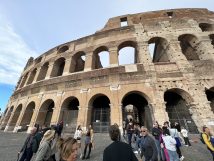 In addition to the Global Smyrna Meeting (June 2027), we are planning an Italy tour in May 2027. The tour will be offered in two parts. They will overlap in Rome. Choose either—or do both!
Part 1: Acts 28—Malta—Sicily—Italy—Rome (9 days)
Part 2: Rome & Ostia—Assisi—San Marino—Ravenna—Venice—Florence (9 days)
Combined: 16 days
Once the dates and and prices have been nailed down, I will send an email to the entire BST group.
[13] DONATE
To support the work of the International Bible Teaching Ministry, or to contribute to the long-term financial needs of the Colossae excavations, please click HERE.
For 2027 and 2028 tours, please visit the website. If you sign up for the bi-monthly newsletter, you will always be informed. If you opt to come to the 2027 Global Smyrna Meeting / Tour, this is the link to use.


