|
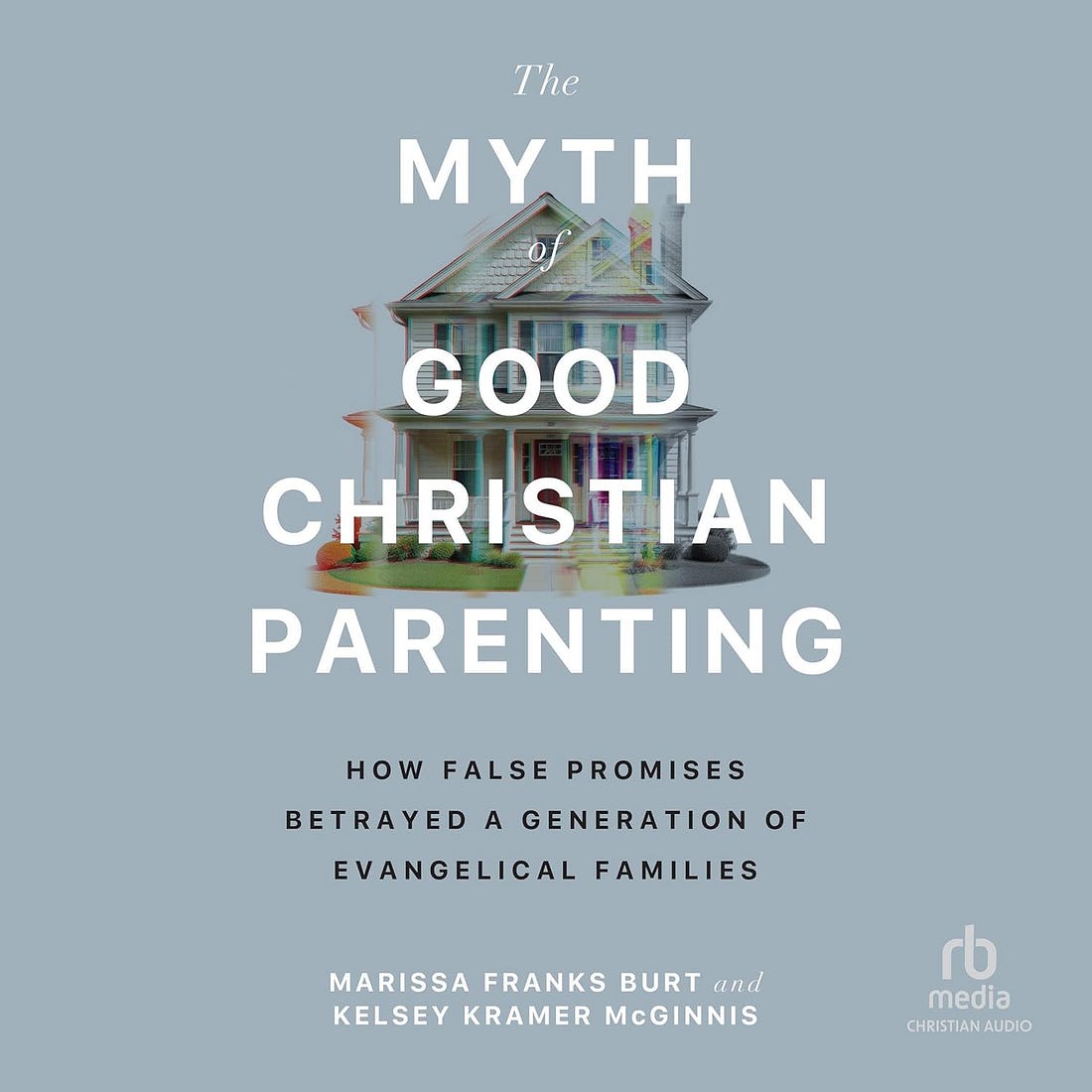
"How False Promises Betrayed a Generation of Evangelical Families"
This book was so good! Incredibly helpful, insightful, and encouraging. I recommend it wholeheartedly. Plus, added bonus, it was written by two women with graduate degrees in theology and education, which is rare in Christian parenting literature. “Many parents who had worked hard to raise their children “the Christian way” were now experiencing guilt, shame, anger, or worry that they had done it all wrong.” (p.xi of the introduction). As the children raised in the boom of the evangelical movement of the 80s and 90s were reaching adulthood, the long-term damage of their upbringing came to light. Yes, some kids turned out “okay”, but they were in the minority. Huge numbers of young people left the church, and many were damaged emotionally. Their parents felt betrayed. They were sold a myth, a lie, and they felt let down. They were told that, if they raised their kids a certain way, the children would all follow Jesus and thrive. But that was not what happened. As a result, the shame and guilt parents are experiencing today are heavy burdens to carry. Parents feel like failures, as their children do not reflect the promises they were told. Many adult children chose a different path. “Questioning these beliefs sometimes led to strained relationships or inauthentic connections with parents who did not understand why their children were backsliding or rejecting God’s plan. Parents perpetuated the myths, something that caused harm in the momentand also displaced the opportunity — year in and year out — for them to learn how to connect with their children as individuals. This left families uniquely ill-equipped for the moments when the blueprints failed them, and the myths were exposed.” Sadly, when parents are unwilling to re-examine their parenting and listen to their kids’ lived experiences, it can lead to great harm and even estrangement. Parents may have good intentions, but good intentions are not enough when much damage has taken place. Emphasizing behavior, compliance, and obedience over real connection with our children is now causing so much grief. Parents and children were held to impossible standards, and the results are now less than optimal. What was sold to parents in evangelical circles was a false promise. The whole premise was transactional: If you do this and that, the result will automatically be so. It was a formula. There was a right way to raise kids. The authors of the book call this “the prosperity gospel parenting promises". “The good-Christian parenting empire runs on the assumption that parental intentionality will achieve certain results.” (p.174) Indeed, whole empires were built on this idea of good Christian parenting, and those empires made (and are making) a lot of money for evangelical men, as they write books and become rich on the speaking circuits. The flip side of this premise is that when kids decide to be Christians, join their parents’ church, and even possibly go into full-time ministry, parents take the credit. They are deemed “good parents”. There can ensue a lot of misplaced arrogance. What is even more confusing, as in our own family’s case, is when in the same family, some kids want nothing to do with the church, and others are fully committed to their faith. What does that say about our parenting according to this false formula? One of the reasons we and many other parents were won over by this parenting approach was that it relieved anxiety and fear through a certainty-type methodology (p.30). Parenting is scary. Which leads me to my next takeaway from the book. The parenting approach advocated by evangelical churches is rooted in a fear of “the world” and its evil influences. If we do not protect our families and follow rigid rules of parenting, chaos will ensue. Society will crumble amidst lawless anarchy, relativism, and permissiveness. “Parenthood forces us to reckon with how out of control life is, and Christian parenting tips that promise protection or control are incredibly appealing. If you do it right, you and your child will be safe. It’s a heady promise, especially for parents worried that their children may be lost to cultural drift.” (p.47&48) Unfortunately, that “one-size-fits-all” parenting style backfired badly with so many families. What claimed to be “biblical” actually was not very Christlike. James Dobson and others advocated for parenting practices such as corporal punishment, which led to much abuse. Listening to the stories of the now young adults in their 20s and 30s raised in that environment is nothing short of heartbreaking. We expected our kids to obey “the first time” and not just that, but to do so with a happy heart and a happy face. We were taught that children should not win, and that we had to “break” our kids’ will, or we were failing. One can imagine how easily it would be to slip into child abuse. I am also horrified when I remember how we were told to start spanking our children at the age of six months. No wonder so many of the kids are now traumatized and damaged emotionally. One of the unintended consequences (who could have predicted this?) is the high incidence of religious OCD or scrupulosity in young adults who were made to feel guilty all the time. Children raised this way really did not have any real agency. We prided ourselves on the fact that our children had free will, but they actually did not. “Bounded choice” is the correct term. I wrote a post on the topic a year ago. The sad thing in all of this is that there was no alternative. We were never presented with options of different styles of parenting based on the local culture or the different makeup of various families, the types of personalities, children experiencing neurodivergence, etc. There was no nuance. Certainty ruled. And sadly, a lot of the teaching was conducted by young couples who had not raised their kids into adulthood yet, so the system had not been tested. The problem with traditional “good Christian parenting” is that it does not leave room for children’s agency. It denies their individuality and humanity in so many ways. “Such a framework left little room for consideration of children’s unique needs and desires, or even their humanity.” (p.87) Parents acted as if they had full control, instruments of God, but as this next quote says, “Parents are not godlike agents of authority. Parents are simply human beings, people entrusted with the care of vulnerable children for a short time.” (p.171) So what is the solution? Humility, listening, patience, and a desire for repair. Our children are good kids, and the vast majority, if not all, want a loving relationship with us, a connection with their parents. I have found our adult children to be incredibly gracious and forgiving. As my oldest daughter keeps telling me, if I keep learning, that is the best sign of love and repentance. “We invite parents to reclaim their agency and autonomy. We’d like to equip you to cultivate a wisdom that enables you to grow in your understanding of your family background and history, the unique needs and personalities of the children entrusted to you, and the strengths and weaknesses of different methodologies.” (p.179) This book is too rich for me to do it justice through a quick review. I would urge you to read it for yourself. It is a very encouraging and insightful read.
#arewetogether is a reader-supported publication. To receive new posts and support my work, consider becoming a free or paid subscriber. |